The Polygon PoS bridge moves supported assets between Ethereum and Polygon. A withdrawal to Ethereum first burns the bridged token on Polygon; after a checkpoint, a separate Ethereum transaction claims the original asset. The return route needs POL on Polygon and ETH on Ethereum.
 Eugen Voyager

Contents
Choose the network, token and route
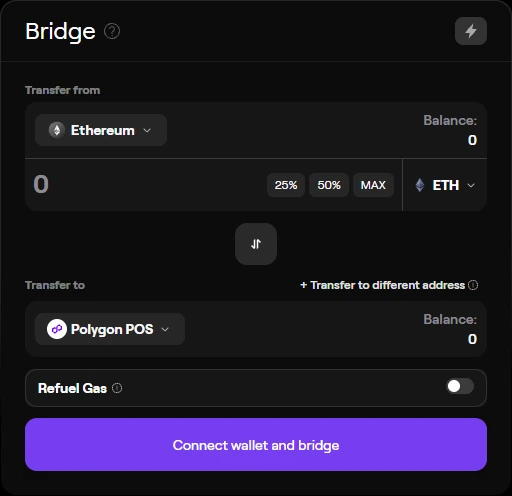
Open Polygon Portal and select Ethereum and Polygon PoS as the source and destination networks. This guide follows the native PoS bridge. Portal also offers third-party bridges, which have their own execution and receipt process.
The Polygon guide covers the network, POL and applications. For a transfer, the particular token pair matters: a native asset and a bridged version can share a name or ticker while using different contracts. Portal must support the chosen asset and direction. Holding another token on the same network does not make it transferable through this route.
From Ethereum to Polygon
- Use Connect Wallet. In Bridge, select Ethereum as the source, Polygon as the destination and a supported token.
- Enter the amount and receiving address. For a transfer to yourself, match that address to your wallet. Leave ETH for Ethereum transactions and arrange POL for subsequent activity on Polygon.
- For an ERC20 token, the form may first request Approve, authorizing the bridge contract to use the token. Approval is a separate operation and does not itself send the asset to Polygon.
- Confirm the actual bridge transfer in your wallet. Keep its transaction hash and open its entry in Transactions.
- Wait for the transfer to finish and the destination token to arrive on Polygon. If your wallet does not display it automatically, add the correct contract for the destination version.
For this deposit, the bridge locks the original asset on Ethereum and mints its corresponding representation on Polygon at a 1:1 ratio. Funds become available on the destination network after the bridge message is processed; a successful source transaction is an intermediate step.
From Polygon to Ethereum
Reverse the direction in Portal: Polygon → Ethereum. Choose the supported bridged token and submit the withdrawal. This transaction uses POL for A measure of the work a network performs to process a transaction. The network fee depends on the amount of work and its price, and is paid in the asset specified by the network rules. and burns the withdrawing representation on Polygon.
Next, open Transactions. The bridge waits for a checkpoint anchoring Polygon data to Ethereum. Once the entry enables claiming, complete the Claim action on Ethereum and pay its gas in ETH. If the interface separates this into Initiate Claim and Claim Tokens, finish the displayed sequence.
After the final transaction confirms, verify receipt of the original asset at the intended Ethereum address. Continue the existing withdrawal entry rather than sending another withdrawal to make Claim appear. Its status shows readiness for that particular route.
Costs and unfinished transfers
The token amount and gas expenses are separate parts of a transfer. Depositing involves Ethereum transactions, including an ERC20 approval when required. Returning involves the Polygon withdrawal and Ethereum claim. Your wallet estimates the fee for the relevant network before each signature.
- Approval succeeded, but nothing moved. Return to the form and complete the transfer; approval does not replace it.
- The Polygon withdrawal confirmed, but Claim is unavailable. Open its Portal status; the checkpoint stage must finish first.
- Claim is available, but the wallet cannot submit it. Switch to Ethereum and provide ETH for gas at the claiming address.
- Portal says completed, but the balance is missing. Match the network, recipient and token contract. Adding a token to your wallet changes its display; it does not send the funds again.
Withdrawing directly from an exchange to Polygon is a separate funding route; compare its charges on the POL withdrawal-fee page. Assets left on the retired Polygon zkEVM use a separate Claims process.
See the PoS bridge documentation for locking and minting, and the Portal withdrawal guide for claiming on Ethereum.
EV
Eugen Voyager
Crypto analyst and blockchain developer. In the industry since 2018. Creator of Telochain blockchain, GameFi project Telomeme, and Yieldo platform. Author of Telegram channel @tonsdot.
How we collect and check data — Yieldo's methodology.
How we publish, date and correct material — editorial policy.